
Skyward Innovation: Astronomy Research Ideas and Space Telescope Projects for Learners
Exploring the universe no longer requires a mountaintop observatory. With open datasets, low-cost instruments, and a growing body of citizen-science platforms, students can pursue astronomy research ideas that are both rigorous and achievable. A powerful starting point is mining publicly available observations from missions such as Hubble, TESS, and Gaia. Learners can ask testable questions—How common are hot Jupiters in short-period orbits? Do stellar clusters show age gradients?—and then filter, visualize, and model the data using Python libraries like Astropy, Lightkurve, and SciPy. This blend of coding and astrophysics builds confidence in handling real-world noise, systematics, and statistical inference.
On the observational side, photometry offers accessible pathways. Students can measure brightness curves of variable stars or attempt exoplanet transit detections with small telescopes and consumer CMOS cameras. Even without large optics, a DIY spectrograph—built from a simple diffraction grating—can reveal stellar absorption lines, enabling inquiries into chemical composition and radial velocity shifts. In urban settings, skyglow mapping with SQM meters and smartphone sensors turns light pollution into a quantifiable research project, linking environmental science with astronomy.
For teams with coding experience, pipeline design becomes a core skill. A workflow might include data ingestion from MAST, detrending light curves, applying periodograms for signal detection, and validating potential events against known catalogs. Students learn to structure hypotheses, define inclusion criteria, and evaluate false positives—practices that mirror professional research. Collaborations with citizen-science initiatives (e.g., variable star classification or gravitational lens identification) provide feedback loops through active communities and mentoring forums.
Ambitious groups can ideate small-scale Space Telescope Projects in the form of instrument simulators or proposals that target archival datasets rather than requesting new telescope time. For instance, a mock survey could analyze star-forming regions using H-alpha filters and cross-match results with infrared archives to track dust attenuation. Others might prototype a CubeSat sensor payload on the ground—calibrating detectors, modeling pointing jitter, and designing on-board compression. Across these activities, the emphasis stays on reproducibility, transparent methods, and insightful visualization, transforming curiosity about the cosmos into publishable, portfolio-ready research.
Mind Meets Method: Cognitive Science for High School
Understanding how people think, learn, and remember provides a toolkit for better study habits and technology design alike. In a high-school setting, cognitive science thrives on careful experimental design, ethical data collection, and clear analysis. Foundational topics include attention, perception, working memory, language, and decision-making. Students can replicate classic paradigms—the Stroop effect to test interference, the n-back task for working memory, and visual search for attention—while adding modern twists such as digital stimuli or adaptive difficulty curves. These projects teach operational definitions and control conditions: randomization, counterbalancing, and pre-registration of hypotheses.
Measurement must be precise yet accessible. Reaction times can be captured using browser-based tools that log millisecond events, while recall accuracy and confidence ratings provide richer dependent variables. To deepen rigor, students address confounds—practice effects, fatigue, and device variability—by limiting trial lengths, adding breaks, or standardizing equipment. Data analysis can progress from descriptive statistics and effect sizes to t-tests, ANOVAs, or simple regression, conducted in spreadsheets or Python (pandas, seaborn, statsmodels). Visual reports that include confidence intervals and power considerations show a mature grasp of uncertainty.
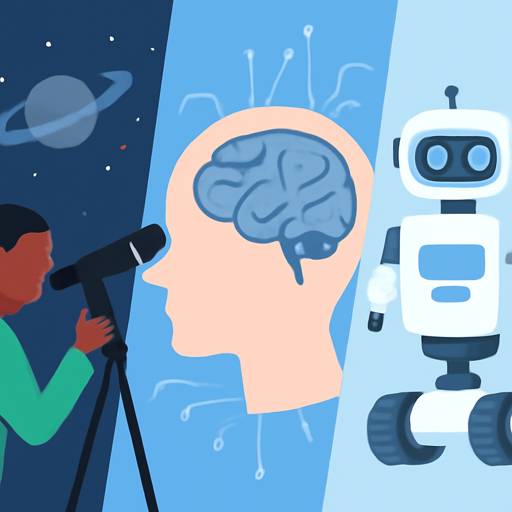
Ethics sit at the heart of human-subjects research. Consent forms, anonymization, and age-appropriate debriefings should be standard practice, with special care around tasks that might induce stress. Projects can connect directly to learning: testing spaced repetition versus cramming, charting how sleep impacts recall, or evaluating whether dual coding (text plus visuals) improves comprehension. Another angle is perception—creating illusions to probe top-down processing, or using simple EEG headsets and eye-tracking apps where available, always within school policies and safety limits.
Real-world applications make results tangible. Classrooms can investigate bilingual advantages in task switching or explore decision biases by framing the same choice as a gain versus a loss. Technology tie-ins include UX tests that compare app interfaces for cognitive load. Educators encourage students to write preregistered plans, share anonymized datasets, and produce replicable analyses—habits that echo best practices in open science and prepare learners for advanced study in cognitive science for high school curricula and beyond.
Building Futures: Humanoid Robotics for Students and Swarm Robotics Student Projects
Robotics turns abstract STEM principles into moving, sensing, problem-solving machines. For many teams, humanoid robotics for students is a captivating gateway, uniting mechanics, electronics, and AI. Entry-level builds start with microcontrollers (Arduino) or single-board computers (Raspberry Pi), paired with servo-driven joints and 3D-printed frames. Early milestones include controlling joint trajectories, calibrating torque, and stabilizing posture with IMU feedback. From there, learners tackle kinematics: forward kinematics to predict end-effector positions, then inverse kinematics to plan reachable footfalls. Balance control via PID loops and ZMP-inspired heuristics helps biped robots stand, walk, and recover from nudges.
Vision and interaction bring humanoids to life. A camera and OpenCV can enable face tracking, color-based object following, or ArUco-marker navigation. Speech pipelines using local wake-word detectors and cloud-free toolkits create privacy-preserving voice interfaces. Safety and reliability remain essential: fuse power lines, route wires away from joints, and implement software interlocks that halt motion on sensor anomalies. As projects grow, frameworks like ROS or ROS 2 orchestrate modular nodes for perception, control, and planning; simulation tools (Gazebo, Webots) let teams iterate gaits and grasp strategies without breaking parts.
Parallel to humanoids, distributed intelligence shines in swarms. Small, inexpensive robots—micro:bit rovers, Kilobot-like clones, or custom PCB platforms—collectively perform tasks no single bot could complete alone. Students program simple local rules that yield complex global behaviors: flocking via Reynolds’ rules, formation control with consensus algorithms, or foraging using pheromone-inspired gradients. Communication can be as basic as IR signaling or Bluetooth LE broadcasts; localization ranges from dead reckoning to AprilTag beacons. Assessment focuses on scalability, robustness to failure, and energy efficiency, with metrics like time-to-completion or coverage percentage across increasing swarm sizes.
Applied challenges make swarm theory concrete. Warehouse-style item sorting demonstrates multi-agent routing; disaster-mapping scenarios simulate frontier exploration and distributed SLAM; precision agriculture trials model weed detection or soil sampling at scale. Simulation lowers costs and speeds iteration before hardware rollout; later, students test in arenas with obstacles, varied lighting, and noise to validate real-world resilience. For curated curricula, kits, and mentorship, programs centered on Swarm robotics student projects help learners bridge theory and practice—scaffolding algorithmic thinking, systems engineering, and collaborative problem-solving. Together, Swarm robotics student projects and humanoid builds cultivate a systems mindset: sensing feeds control, control drives actuation, and emergent behavior arises when many simple agents coordinate in dynamic environments.
