
When mobility becomes a challenge for a loved one—or for yourself—even simple actions like rising from a chair or moving to the bathroom can feel monumental. Caregivers often bear the physical and emotional brunt of these transfers, risking back injuries and fatigue. A sit to stand lift for home use offers a transformative solution: it provides gentle, stable assistance for individuals who can bear some weight on their legs. Unlike full-body sling lifts, these devices work with the user’s natural standing motion, promoting dignity and active participation. The right lift not only protects caregivers from strain but also helps the user maintain muscle tone and confidence. In this guide, we explore how to choose, use, and benefit from a sit-to-stand lift in a home environment, covering practical considerations, real-world case studies, and key features that separate an effective device from an inadequate one.
Understanding the Mechanics and Benefits of Sit-to-Stand Lifts
A sit-to-stand lift, also known as a stand-assist lift, is designed for individuals who have some lower body strength and can bear partial weight on their feet but lack the stability or endurance to stand independently. The mechanism is elegantly simple: the user sits on a padded seat or sling, the lift tilts forward slightly, and a hydraulic or electric motor raises them to a standing position. Critical to this process is a knee pad that prevents the user from sliding forward and a chest band that secures the torso. Unlike a patient lift that requires hoisting the entire body weight, a sit-to-stand lift works with the user’s own muscle recruitment. This active engagement helps preserve bone density and joint flexibility, which are often lost when mobility is completely passive.
In home settings, the primary benefit extends beyond the user. Caregivers—often family members without formal training—face enormous physical demands. A single transfer can exert over 100 pounds of force on the lower back. By incorporating a sit to stand lift for home use, caregivers eliminate the awkward lifting movements that most commonly lead to injury. The lift’s frame is typically mounted on locking casters, allowing it to be wheeled between rooms—from bedside to wheelchair to toilet. Many models have adjustable base widths and leg openings that fit over standard chairs and commodes, making them versatile for various home layouts. Another often-overlooked advantage is psychological: users who can stand, even with assistance, report higher self-esteem and less depression than those who are fully lifted. They retain a sense of agency over their own bodies, which is crucial for long-term emotional well-being.
Technical considerations are equally important. A home-use lift should have a weight capacity suitable for the user—typically ranging from 350 to 500 pounds. Battery-powered electric lifts offer convenience, especially in homes without accessible outlets near transfer points. However, manual hydraulic models are quieter and less expensive, though they require more physical effort from the caregiver to pump the lever. The knee pad should be well-padded and adjustable in height, as improper positioning can cause discomfort or instability. Many modern units also include removable, washable slings or seat pads to maintain hygiene. When evaluating options, look for a lift that has been tested to meet medical safety standards (such as EN ISO 10535) and that comes with a clear warranty and service support. A poorly constructed lift can wobble during transfers, creating a fall risk that defeats the very purpose of the device.
Enhancing Daily Routines: Integrating the Lift into Home Care
Successful use of a sit-to-stand lift in a home environment depends on consistent, safe integration into daily routines. The first step is training—both the user and the caregiver must understand the sequence of actions to avoid panic or mishandling. For example, the user should wear non-slip shoes and lean slightly forward as the lift engages. The caregiver must ensure the knee pad is snug against the user’s shins and that the chest strap is secured but not constricting. Most manufacturers provide training videos or manuals, but a session with a physical therapist can be invaluable for addressing individual needs. After the initial adjustment, the lift can be incorporated into typical transfer scenarios: getting out of bed in the morning, moving to a dining chair, using the toilet, or returning to a recliner in the evening. Because the lift is mobile, it can be stationed near the most frequently used seating area and moved only when needed, keeping the home environment uncluttered.
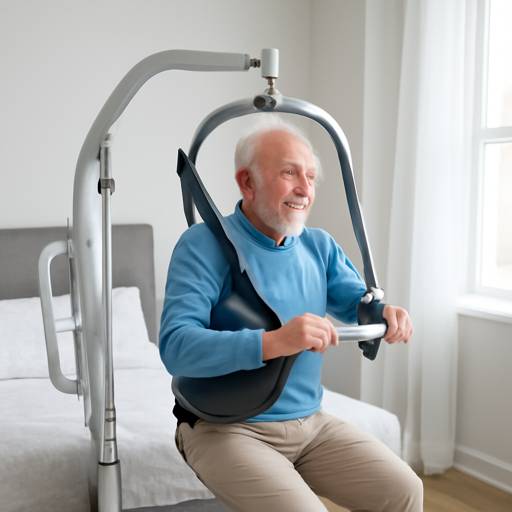
Real-world case studies illustrate the profound difference a sit-to-stand lift can make. Consider the example of Paul, a 72-year-old retired teacher recovering from hip replacement surgery. Initially, his wife Julie struggled to help him up from their low sofa, and she developed persistent lower back pain. After friends recommended a sit to stand lift for home use, Julie learned to place the lift over the sofa, engage the knee pad, and gently raise Paul to a standing position. Within a week, her back pain subsided, and Paul progressed to taking a few steps with a walker before the lift lowered him back down. The lift not only reduced Julie’s physical strain but also accelerated Paul’s rehabilitation because he could practice standing several times a day without fear of falling. Another case involves Maria, a caregiver for her mother with advanced arthritis. The mother’s inability to stand from a seated position meant she was confined to bed for most of the day. With a sit-to-stand lift, Maria could transfer her mother to a wheelchair and take her outdoors. The emotional lift was palpable: the mother began eating better and participating in family conversations again.
For caregivers, it is crucial to plan the environment around the lift. Clear pathways between rooms should be at least 32 inches wide to accommodate the lift’s wheels. Avoid throw rugs that can catch the casters. If the lift is used for toileting, consider a bedside commode or a toilet with enough clearance for the base to slide around it. Many families also choose to purchase an additional sling or seat pad so one can be washed while the other is in use. Hygiene is particularly important for users with incontinence: a waterproof sling liner can extend the life of the seat and reduce odours. Additionally, maintaining the lift’s battery or hydraulic system according to the manufacturer’s schedule ensures reliability. A sudden battery failure during a transfer can be dangerous, so nightly charging or periodic hydraulic fluid checks become part of the care routine. With thoughtful planning, a sit-to-stand lift becomes a seamless part of daily life rather than an intrusive appliance.
Choosing the Right Model: Key Features and Safety Considerations
Selecting a sit-to-stand lift for home use can feel overwhelming given the many models on the market. However, focusing on a few critical features simplifies the decision. The most important criterion is safety. Look for lifts that have a wide base for stability (typically at least 23–27 inches wide) and non-slip casters with brakes on at least two wheels. The lift should include a manual emergency release system so the user can be lowered manually if power fails. Weight capacity must exceed the user’s current weight by at least 20% to allow for clothing and future weight gain. For home use, portability matters: some lifts disassemble into two or three pieces for easy storage or transport in a car, which is ideal for users who travel to medical appointments or visit family. The height of the knee pad and the depth of the seat should be adjustable to fit the user’s leg length—a one-size-fits-all approach can lead to slippage or discomfort. Also, consider the sling type. Some users prefer a padded seat sling that stays under them while seated, while others prefer a smaller band that goes behind the thighs. Trial with a physical therapist is ideal, but if that is not possible, choose a lift that offers multiple sling options.
Another aspect is the controller interface. For electric lifts, a handheld pendant with clearly labelled buttons (up, down, emergency stop) is standard. Some advanced models offer a caregiver remote that can control the lift from both sides, reducing awkward reaching. If the user has limited hand function, a lift with a simple single-button raise/lower feature is preferable over complex multi-speed controls. The noise level of the motor is also relevant in a home setting—a loud grinding sound can be disturbing during early morning transfers. Reading user reviews and watching demonstration videos can give clues about real-world noise levels. Additionally, check warranty length: a minimum of two years on the frame and one year on the motor or hydraulic pump is standard. Companies that offer phone support and live chat are preferable because home users often encounter unexpected issues, such as a jammed wheel or a loose screw, that need immediate troubleshooting.
Finally, consider the cost versus long-term value. While a manual hydraulic lift may cost $800–$1,500, an electric model with a higher weight capacity and better ergonomics can run $2,500–$4,000. Many medical insurance plans, including Medicare Part B, may cover a sit-to-stand lift if prescribed as durable medical equipment (DME) with documentation from a physician. However, coverage varies widely, and some plans require a specific diagnosis (such as post-surgery immobility or degenerative joint disease) and a statement that the user can bear weight. It is worth contacting your insurance provider before purchasing. For those paying out of pocket, the investment often pays for itself by avoiding caregiver injuries and hospital readmissions. In fact, a single emergency room visit for a caregiver back injury can cost more than a premium electric lift. By carefully weighing features, safety, and cost, families can select a lift that will serve them for years, providing reliable, dignified assistance that keeps the user engaged in standing—and in life. When you are ready to explore options, a trusted provider of sit to stand lift for home use can offer expert guidance and a range of models suited to your specific needs.
